

Why UK dog owners need a grooming kit: 5 key benefits
Regular grooming is one of those things many UK dog owners treat as optional, something reserved for show breeds or particularly fluffy dogs. But the reality is quite different. Parasite control via grooming prevents an estimated 5.5 million infections per year in the UK, saving around £53 million in vet costs annually. That is not a small thing. Whether your dog is a scruffy terrier or a sleek Labrador, a proper grooming routine at home supports their health, keeps costs manageable, and genuinely strengthens your bond with them. This guide covers the real-world health benefits, honest cost comparisons, and practical kit advice so you can get started with confidence.
Table of Contents
- Why regular grooming matters for all dogs
- The real costs of professional vs home grooming in the UK
- What should a complete dog grooming kit contain?
- How to use grooming kits safely: top tips for UK dog owners
- The hidden impact of at-home grooming: what most owners don’t realise
- Get started with expert-approved grooming solutions
- Frequently asked questions
Key Takeaways
| Point | Details |
|---|---|
| Regular grooming prevents illness | Consistent use of grooming kits stops millions of parasite infections and keeps your dog healthy. |
| Home kits save money | DIY home grooming can slash costs compared to monthly salon visits for UK dog owners. |
| Every breed benefits | Short, curly, or long-haired—every dog gains from a simple, regular grooming routine. |
| Right tools make a difference | Using dog-specific combs, trimmers and gloves ensures safety and effectiveness at home. |
| At-home grooming strengthens bonds | Grooming is a chance to check for health changes and deepen trust between you and your pet. |
Why regular grooming matters for all dogs
It is easy to assume that short-haired breeds or dogs who spend most of their time indoors do not really need much grooming. That assumption can quietly lead to problems. Regular grooming is not just about keeping your dog looking tidy. It is a meaningful part of their overall health care, and it matters for every dog regardless of breed or coat type.
The skin and coat are your dog’s first line of defence against the environment. Brushing regularly removes dead hair, distributes natural oils, and keeps the skin underneath healthy and well-ventilated. Without it, even short-haired dogs can develop dry, flaky skin or small irritations that go unnoticed until they become something more serious.
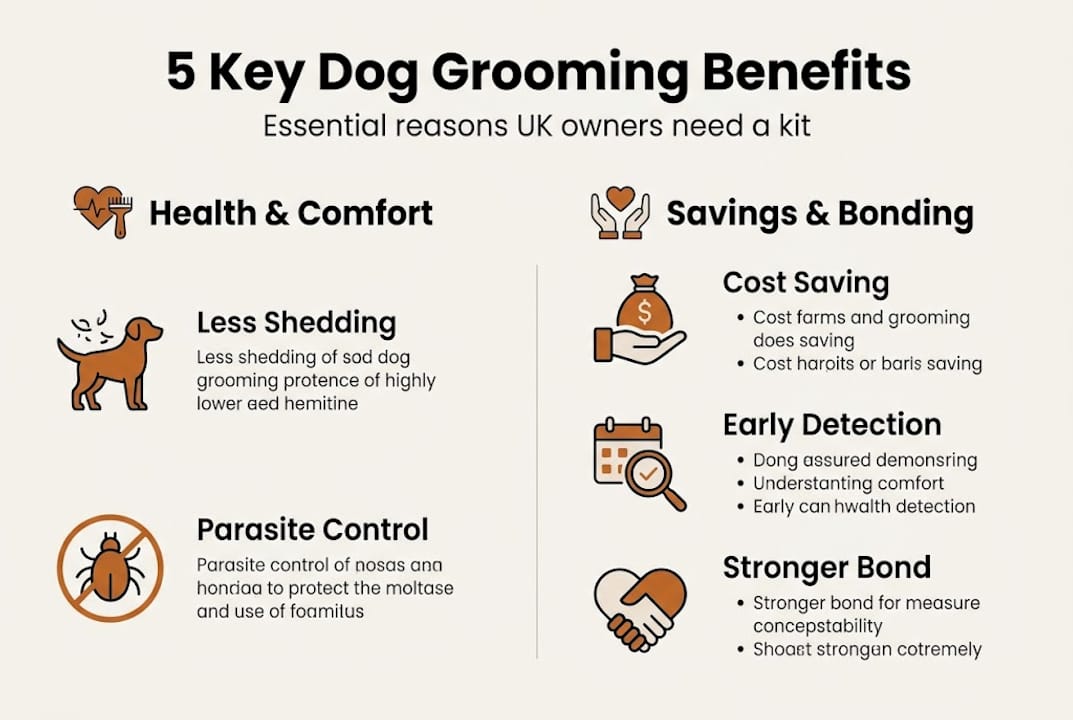
Parasite control is where the numbers become genuinely striking. Grooming prevents 5.5 million parasite-related infections per year across the UK, contributing to an estimated £53 million saved in veterinary costs. Fleas and ticks are far easier to catch and remove during a calm grooming session than they are once an infestation has taken hold. Checking your dog over regularly gives you that early warning.
There is also a comfort and emotional dimension that owners often underestimate. Dogs who are groomed consistently tend to be calmer and more relaxed during handling. This matters enormously at the vet, where a dog that is used to being touched all over is far less stressed. Regular grooming builds that familiarity gradually and gently.
One important caution worth raising: over-bathing can strip the coat of its natural oils, causing dryness and irritation. Dog experts are clear that bathing too frequently does more harm than good, and using human shampoos or grooming products on dogs is a genuine risk. Human products are formulated for a different skin pH and can cause reactions ranging from mild irritation to more serious skin conditions.
Even low-shedding breeds like Poodles or Bichon Frises need consistent grooming because their coats grow continuously and can mat badly without attention. A dog does not need to shed heavily to need regular brushing, nail trimming, and coat maintenance. The breed shapes the routine, but every dog has one.
Pro Tip: Run your fingers gently along your dog’s coat during every grooming session, feeling for any lumps, bumps, or areas of sensitivity. Catching something unusual early can make a real difference to treatment outcomes.
The real costs of professional vs home grooming in the UK
Professional grooming in the UK typically costs between £30 and £60 per session, depending on the breed, coat type, and location. For a medium-sized dog needing a groom every six to eight weeks, that adds up to somewhere between £240 and £480 per year. For longer-coated breeds that need more frequent attention, the annual cost can climb considerably higher.
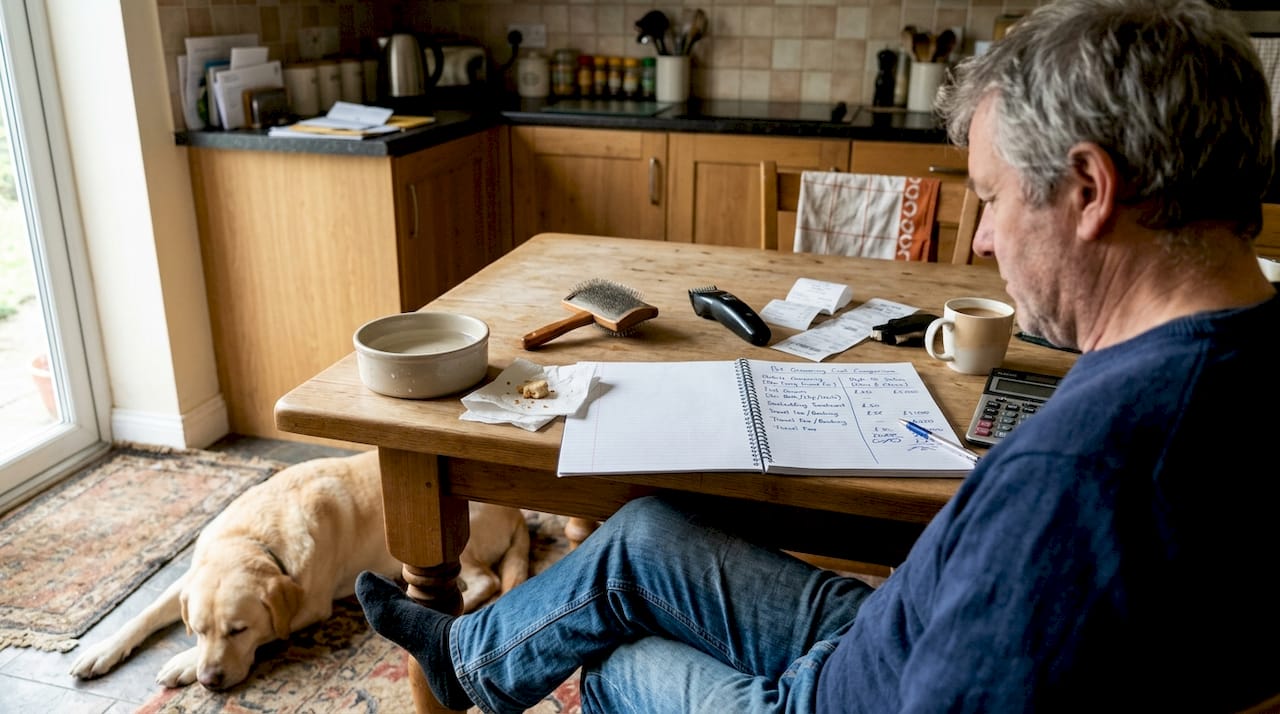
Home grooming kits, by contrast, represent a one-off investment that pays for itself quickly. A quality kit covering the core tools typically costs between £30 and £80 upfront, with only small ongoing costs for shampoo and replacement items. The savings over a single year are straightforward to calculate, and they compound over the lifetime of your dog.
That said, home grooming is not about replacing professional groomers entirely. It is about maintaining your dog’s coat and hygiene between appointments, which actually makes professional sessions easier and less frequent. A dog who is brushed regularly at home arrives at the groomer without mats or heavily soiled fur, which keeps the session shorter and the cost lower.
| Grooming approach | Typical cost | Frequency | Annual estimate |
|---|---|---|---|
| Professional groomer | £30 to £60 per session | Every 6 to 8 weeks | £240 to £480+ |
| Home kit (initial) | £30 to £80 one-off | Ongoing | Low ongoing cost |
| Combined approach | Kit + occasional pro | As needed | Significant saving |
For owners managing a household budget, the combined approach makes the most sense. You handle the regular brushing, ear cleaning, and coat maintenance at home, and you visit a professional for clipping or specialist treatments when genuinely needed.
Our 8 in 1 grooming kit is thoughtfully curated to cover exactly this kind of everyday maintenance, and pairing it with a pet grooming hair dryer means you can complete a full wash-and-dry session at home without any fuss.
Pro Tip: Track what you spend on professional grooming over three months. Most owners are genuinely surprised by the total, and it makes the case for a home kit far clearer.
What should a complete dog grooming kit contain?
Knowing that a home kit saves money is one thing. Knowing what should actually be in it is where most owners feel uncertain. A well-rounded grooming kit does not need to be complicated, but it does need to cover the key areas: coat, skin, nails, ears, and teeth.
A good slicker brush is the foundation of almost any grooming routine. It removes loose hair, works through light tangles, and keeps the coat looking healthy between baths. For dogs with longer or thicker coats, a de-matting comb is also essential. Mats are not just unsightly; they can pull on the skin and cause real discomfort if left unaddressed.
Nail trimmers are something many owners avoid, but overgrown nails affect posture and can cause joint pain over time. Dog-specific nail clippers with a safety guard make the job far more manageable, especially if you introduce them gradually. A styptic powder is worth keeping nearby in case of accidental nicks.
As dog experts consistently advise, always use products formulated specifically for dogs. Human shampoos, conditioners, and even some wipes can disrupt your dog’s skin pH and cause irritation. A gentle, dog-specific shampoo suited to your dog’s coat type is a non-negotiable part of the kit.
| Tool | Purpose | Coat type |
|---|---|---|
| Slicker brush | Removes loose hair and light tangles | All coats |
| De-matting comb | Breaks up knots and mats | Long or thick coats |
| Nail clippers | Keeps nails at a safe length | All dogs |
| Dog shampoo | Cleans without disrupting skin pH | All coats |
| Ear cleaning solution | Prevents wax build-up and infection | All dogs |
For owners with dogs that shed heavily, our hair removal gloves are a practical addition that makes brushing feel more like a massage for your dog. And if your dog has a longer coat that needs regular conditioning, a steam pet brush can make a noticeable difference to coat quality and shine.
The essential grooming kit contents we recommend cover all of the above in one place, so you are not piecing things together from multiple sources.
Pro Tip: Introduce new tools one at a time, letting your dog sniff and investigate each item before you use it. This small step dramatically reduces anxiety during grooming sessions.
How to use grooming kits safely: top tips for UK dog owners
Having the right tools is only half the job. Using them correctly and safely is what makes home grooming genuinely beneficial rather than stressful for you and your dog.
Start every session with a calm environment. Choose a time when your dog is relaxed, not just after a walk when they are still excitable. A non-slip mat on the floor or a stable surface gives your dog confidence and keeps them still without force.
Begin with brushing before any bathing. Working through the coat when it is dry makes it much easier to spot and address tangles. Wet mats tighten and become harder to remove, so always brush first. Work in the direction of hair growth, using gentle strokes and checking your dog’s reaction as you go.
For nail trimming, dog experts recommend trimming little and often rather than waiting until nails are very long. Clip small amounts at a time to avoid the quick, which is the blood vessel inside the nail. If your dog has dark nails where the quick is harder to see, trim conservatively and check the cut surface after each clip.
Bathing frequency depends on your dog’s lifestyle and coat. Most dogs do well with a bath every four to eight weeks. More frequent bathing strips natural oils and can cause the skin to become dry and itchy. Always use lukewarm water and rinse thoroughly to avoid residue irritating the skin.
After bathing, drying your dog properly matters more than many owners realise. Damp fur left too long, especially in skin folds or thick coats, creates the conditions for bacterial and fungal growth. Using a dog-specific hair dryer on a low, warm setting speeds up drying safely and keeps your dog comfortable.
For anxious dogs, keep early sessions very short, even just a few minutes of calm brushing, and reward generously with treats and praise. Consistency over time is what builds trust.
The hidden impact of at-home grooming: what most owners don’t realise
We talk a lot about coats and costs, and both matter. But there is something that does not get mentioned nearly enough: regular at-home grooming makes you genuinely more aware of your dog’s body and health.
When you are the one running a brush along your dog’s back every few days, you notice things. A new lump. A patch of redness. A spot that makes your dog flinch. These are the kinds of early signals that can easily go undetected between annual vet checks, and catching them early consistently leads to better outcomes.
We have also seen, through our own experience working with dog owners, that dogs who are groomed regularly at home tend to be noticeably calmer during vet visits. They are simply more accustomed to being handled, touched, and examined. That familiarity reduces stress for the dog and makes the vet’s job easier too.
Beyond health, there is the routine itself. Grooming gives your household a regular, quiet moment of connection with your dog. It is not glamorous, but it is consistent, and consistency is what dogs thrive on. We genuinely believe that the owners who make grooming a regular habit are the ones who feel most confident and least overwhelmed by pet care overall.
Get started with expert-approved grooming solutions
If you have been putting off building a proper grooming routine, now is a genuinely good time to start. The health benefits are real, the cost savings are meaningful, and the tools available today make it easier than ever to do it well at home.

At Remy’s K9 Essentials, we have thoughtfully curated our grooming range with real life with dogs in mind. No gimmicks, just practical tools that work. You can shop the 8 in 1 dog grooming kit to get everything you need in one go, or add our pet hair removal gloves for an easy daily brush that your dog will actually enjoy. Browse the full Remy’s K9 Essentials range and find the right fit for your dog’s coat and your daily routine.
Frequently asked questions
How often should I groom my dog at home?
Most dogs benefit from brushing several times a week, with a bath every one to two months depending on coat type and lifestyle. Longer or thicker coats may need more frequent attention to prevent matting.
Can I use human grooming products on my dog?
No. Dog experts warn that human shampoos and grooming products are formulated for a different skin pH and can cause irritation or more serious reactions in dogs. Always use products made specifically for dogs.
Is home grooming enough, or do I still need professional help?
Home grooming handles regular maintenance very well, but professional groomers remain valuable for clipping, breed-specific styling, and any specialist skin or coat needs. The two approaches work best together.
How does regular grooming help prevent parasites and costly vet bills?
Consistent grooming allows you to spot and remove parasites early, before infestations take hold. Parasite control via grooming prevents an estimated 5.5 million infections per year in the UK, saving around £53 million in veterinary costs annually.