

Essential dog grooming tools for UK owners: expert tips
Grooming your dog is one of those tasks that sounds straightforward until you’re standing in a pet shop aisle, staring at forty different brushes and wondering which one won’t end in a standoff on the bathroom floor. For UK dog owners, the challenge isn’t just finding a brush. It’s finding the right tools for your dog’s specific coat, temperament, and routine. Get it right and grooming becomes a calm, bonding experience. Get it wrong and it’s stressful for both of you. This guide cuts through the noise, matching tools to coat types, explaining what each piece of kit actually does, and helping you build a practical grooming routine that works in real life.
Table of Contents
- How to choose the right grooming tools for your dog
- Essential grooming tools for every UK dog owner
- Comparing brushes, combs, and deshedding tools: which is best?
- Specialist grooming tools: for advanced care and tricky coats
- A practical perspective on building your dog grooming toolkit
- Upgrade your grooming routine with the right tools
- Frequently asked questions
Key Takeaways
| Point | Details |
|---|---|
| Match tools to coat type | The best grooming tools depend on whether your dog has a short, long, double, or curly coat. |
| Start with essentials | A brush, nail clipper, toothbrush, shampoo, and ear cleaner cover most owners’ needs. |
| Expert tools save time | High-velocity dryers and ergonomic gadgets can reduce grooming time and effort for advanced users. |
| Regular routines prevent problems | Consistent brushing and checks help avoid mats, tangles, and health issues in your dog. |
How to choose the right grooming tools for your dog
Before you buy a single brush, it helps to understand what your dog actually needs. Coat type is the single biggest factor in tool selection, and it varies enormously across the breeds most popular in the UK. Brushes are matched by coat type: rubber curry combs and grooming mitts work well for short, smooth coats like Beagles; slicker brushes suit medium and curly coats; undercoat rakes are designed for double-coated breeds like Huskies; and pin brushes are best for long, silky coats. Starting with the wrong brush can mean wasted money, a frustrated dog, and a grooming session that ends before it begins.
Beyond brushes, think about the full picture of your dog’s care needs. Nails, teeth, and ears all require specific tools, and neglecting any of them can lead to real health problems over time. A good nail clipper with a safety guard, a dog-safe toothbrush, and a gentle ear cleaner are all worth including from the start. If you’re not sure where to begin, an all-in-one grooming kit can take the guesswork out of building your toolkit from scratch.
Ergonomics matter more than most people realise. If a brush is uncomfortable to hold or difficult to manoeuvre, you’ll use it less often, and consistency is what makes grooming effective. Look for tools with non-slip handles, lightweight designs, and a size that suits your hand as much as your dog’s coat.
Grooming frequency depends on coat type too. Short-coated dogs may only need a weekly brush, while long or double-coated breeds benefit from daily attention. Regular grooming reduces shedding, prevents matting, and keeps skin healthy. It also gives you the chance to spot lumps, cuts, or parasites early, which is something no vet visit can replace.
Pro Tip: Start with the basics and add specialist tools as your confidence grows. A slicker brush, nail clippers, and a gentle shampoo will cover most dogs’ needs from day one. A grooming hair dryer or steam-powered brush can come later once you and your dog are comfortable with the routine.
“The best grooming tool is the one you’ll actually use consistently. Comfort, fit, and simplicity matter as much as the tool’s features.”
Essential grooming tools for every UK dog owner
Once you’ve identified your dog’s grooming needs, you’re ready to build your toolkit. The core tools for UK owners include slicker brushes, pin brushes, combs, nail clippers or grinders, dog-safe shampoo, toothbrushes with enzymatic toothpaste, ear cleaners, and clippers or scissors for more advanced coat work. Each of these serves a specific purpose, and understanding that purpose helps you use them properly.
A slicker brush is the workhorse of most grooming kits. Its fine, closely set wire pins lift dead hair, remove light tangles, and stimulate the skin. It works across a wide range of coat types, making it one of the most versatile tools you can own. A pin brush is gentler and better suited to long, silky coats where you want to smooth rather than strip. A wide-tooth comb is invaluable for checking your work after brushing, particularly for catching missed mats near the ears, armpits, and tail.
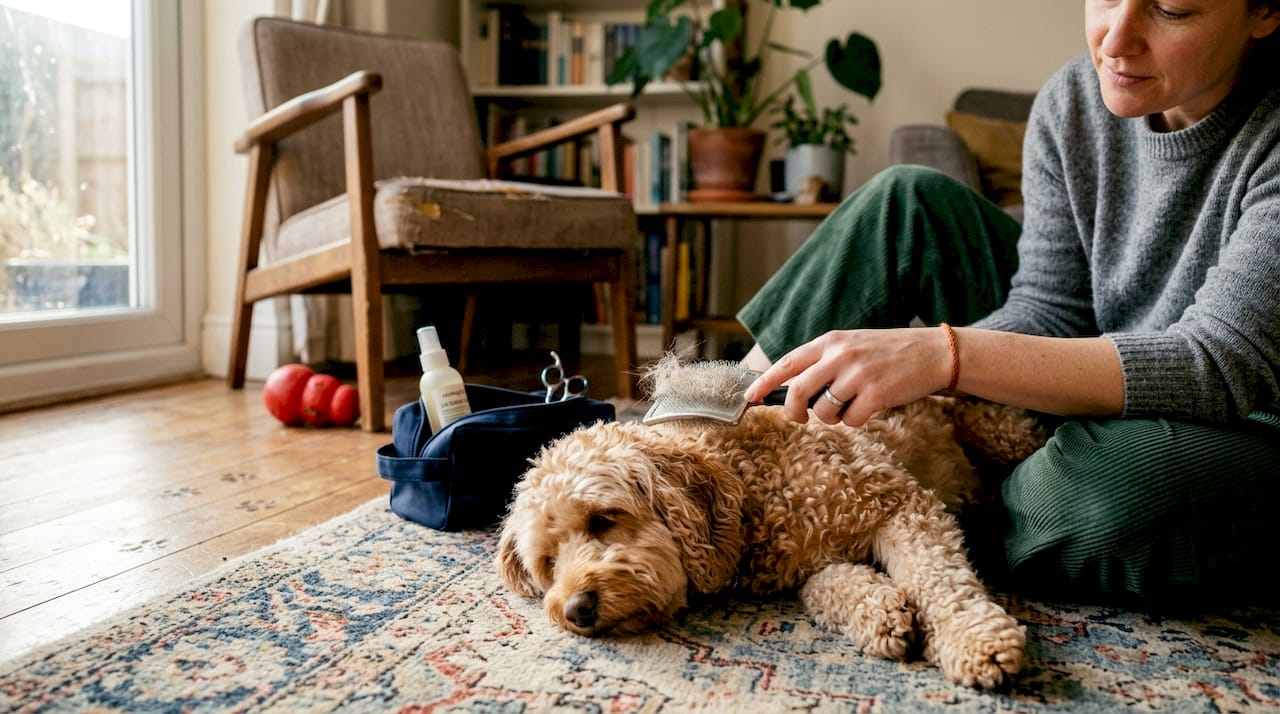
Nail clippers are non-negotiable. Overgrown nails cause discomfort and can affect your dog’s gait over time. If your dog is nervous around clippers, a nail grinder offers a quieter, more gradual alternative. For teeth, enzymatic toothpaste breaks down plaque more effectively than brushing alone and is safe for dogs to swallow. Ear cleaners help prevent wax build-up and reduce the risk of infection, particularly in floppy-eared breeds like Spaniels.
For shedding dogs, a good pair of pet hair removal gloves can be a game-changer. They let you groom while stroking, which many dogs find far less threatening than a brush. They’re also brilliant for a quick once-over between proper sessions. A grooming essentials kit that bundles several of these tools together is often the most cost-effective way to get started without buying everything separately.
Pro Tip: For anxious dogs, introduce each tool gradually using positive reinforcement. Let them sniff the brush, reward calm behaviour, and keep early sessions short. Building a positive association with grooming tools makes every future session easier.
Comparing brushes, combs, and deshedding tools: which is best?
Now that you know the essentials, let’s focus on the area that confuses most owners: brushes and coat tools. Not all brushes are created equal, and using the wrong one can cause more harm than good.
Slicker brushes use fine wire pins to remove tangles and dead hair without irritating the skin, provided you use them gently. Combs with wide and fine teeth help you check for missed mats after brushing. Clippers work best with sharp blades, and cordless models are preferred for home use because they reduce noise and vibration, which helps keep nervous dogs calm.
Here’s a quick comparison to help you decide:
| Tool | Best for | Avoid using on |
|---|---|---|
| Slicker brush | Medium, curly, double coats | Very short or sensitive skin |
| Pin brush | Long, silky coats | Heavy shedders |
| Rubber curry comb | Short, smooth coats | Long or curly coats |
| Undercoat rake | Double-coated breeds | Single-coat or fine coats |
| Deshedding tool (e.g., FURminator) | Heavy shedding double coats | Non-double coats |
| Grooming mitt | Short coats, nervous dogs | Severely matted coats |
One of the most common mistakes we see is owners using a FURminator on a single-coat or non-shedding breed. Avoid using FURminator on non-double coats as it can cause skin damage and strip the coat unevenly. It’s a powerful tool, but only for the right coat type.
For owners who want multi-tool options that cover several coat types, a kit with interchangeable heads or a range of tools is a smarter investment than buying individual specialist items. And for quick, everyday maintenance, fuss-free hair removal gloves remain one of the most practical options for dogs of all sizes.
For more detail on tool selection by coat type, the professional insights from experienced groomers are well worth reading before you invest in anything new.
Specialist grooming tools: for advanced care and tricky coats
Not every grooming challenge can be handled with basics alone. Some coats, and some dogs, need a more considered approach.
For long-haired breeds prone to matting, such as Yorkies or Shih Tzus, a detangling spray applied before brushing makes a significant difference. For matted coats, use detangling spray and line-brush in sections, working from the ends upward. If a mat is too tight to brush out, clipping it away is kinder than forcing a brush through it. Causing pain during grooming creates lasting anxiety, so it’s always better to remove a mat cleanly.
Electric clippers open up a wider range of styling options at home, but they require practice and the right blade for each coat type. Left-handed scissors and ergonomic handle designs reduce strain during longer sessions, which matters if you’re grooming a large breed regularly. These aren’t essential from the start, but they’re worth considering as your skills develop.
High-velocity dryers are another step up. High-velocity dryers cut grooming time by 30% by blowing out loose hair and fluffing the coat as it dries, which also makes brushing easier afterwards. A professional-grade dryer designed for pets is far safer than a standard human hairdryer, which runs too hot and can cause skin burns.
Here’s a simple order for building an advanced toolkit:
- Master the basics: slicker brush, comb, nail clippers, shampoo.
- Add a detangling spray and line-brushing technique for longer coats.
- Introduce electric clippers once you’re confident with scissor work.
- Invest in a high-velocity dryer for faster, more thorough drying.
- Consider ergonomic scissors or left-handed options if you groom frequently.
Pro Tip: Clean and oil your clippers and scissors after every use. Blunt blades pull at the coat rather than cutting cleanly, which is uncomfortable for your dog and frustrating for you. Store tools in a dry case to prevent rust and keep them performing well.
For a deeper look at advanced equipment, the expert guide on advanced tools covers professional-level kit in practical detail.
A practical perspective on building your dog grooming toolkit
Here’s something we’ve noticed from working with dog owners over the years: the ones who struggle most with grooming aren’t the ones with the fewest tools. They’re the ones with too many tools they don’t fully understand or use consistently.
Most dogs genuinely only need a handful of well-chosen items. A good brush suited to their coat, reliable nail clippers, a gentle shampoo, and something for their teeth will cover the vast majority of what they need. A streamlined grooming set used regularly will always outperform a drawer full of gadgets used once a month.
What we think gets overlooked is that grooming is also a health check. Running a brush through your dog’s coat gives you a chance to feel for lumps, check for fleas, and notice changes in skin condition. That’s genuinely valuable, and it has nothing to do with which brush you’re using. Consistency matters far more than complexity. Start simple, learn what your dog responds well to, and build from there. Your dog’s comfort and your confidence are the two best guides you have.
Upgrade your grooming routine with the right tools
If you’re ready to make grooming simpler and more effective, we’ve thoughtfully curated a range of tools based on hands-on experience with real dogs. Our complete grooming kit gives you everything you need to get started without the guesswork, covering the core tools most UK dog owners reach for week after week.
For shedding seasons or quick daily maintenance, our pet hair removal gloves are a firm favourite with owners of all breed types. And if you’re ready to invest in faster, more thorough drying after bath time, our grooming hair dryer is built specifically for dogs, with safety and comfort in mind. Browse our full range and find the tools that fit your dog’s needs.
Frequently asked questions
How often should I groom my dog at home?
Brush daily or weekly depending on coat type, bathe every four to eight weeks, and check nails, ears, and teeth on a weekly basis. Short-coated breeds need less frequent brushing, while double or long-coated dogs benefit from daily attention.
Which dog grooming tools are safe for beginners?
Start with a slicker brush or grooming mitt, nail clippers with a safety guard, and a gentle dog shampoo. These beginner-friendly tools cover the essentials without requiring advanced technique or experience.
How do I prevent mats and tangles in long-haired dogs?
Brush daily with a pin brush or slicker and apply a detangling spray before sessions. For severe tangles, clip out tight mats rather than forcing a brush through them, as this avoids causing pain and distress.
Can I use a human hairdryer or nail scissors for my dog?
No. Human hairdryers run too hot for dogs’ skin and sharp pet-specific blades are designed to cut cleanly without pulling. Pet-specific tools are safer, quieter, and far more comfortable for your dog.