

Improve dog walking discipline with the right gear
If your daily walk with your dog feels more like a battle than a pleasure, you are not alone. Many UK dog owners find themselves pulled in every direction, literally, and come home feeling frustrated rather than refreshed. The good news is that small, deliberate changes to your routine and your gear can make a significant difference. This guide walks you through a practical, step-by-step discipline workflow that draws on evidence-backed training strategies and the right accessories, so every outing becomes something you and your dog actually look forward to.
Table of Contents
- Essential accessories for disciplined walks
- Step-by-step discipline workflow for every walk
- Troubleshooting common discipline challenges
- Creating lasting habits: Reinforcement and review
- Why disciplined walking is about trust, not control
- Practical gear for your walking routine
- Frequently asked questions
Key Takeaways
| Point | Details |
|---|---|
| Right gear matters | A legal ID collar, no-pull harness, and short lead set the foundation for walk discipline. |
| Structure improves focus | Breaking walks into predictable steps makes dogs calmer and more engaged. |
| Positive strategies last | Reward-based routines build trust and reduce disobedience over time. |
| Tackle issues early | Quickly address pulling and recall troubles with targeted practice and route planning. |
Essential accessories for disciplined walks
Getting equipped properly is the first step towards calmer, more controlled walks. It sounds straightforward, but the right gear genuinely shapes how your dog behaves the moment you step outside. When your tools support your training, everything else becomes easier.
The foundation of any walking kit is a flat collar with an ID tag. This is not just good practice; it is a UK legal requirement under the Control of Dogs Order 1992, which states that dogs in public must wear a collar with the owner’s name and address. Beyond legality, a properly fitted flat collar gives you a reliable attachment point for a lead.
For dogs that pull or react to other animals, a no-pull harness is a practical upgrade worth considering. A well-fitted harness redistributes pressure away from the throat and gives you more steering control without causing discomfort. If you are unsure about choosing a harness and retractable lead, it helps to think about your dog’s size, strength, and typical behaviour on walks before buying.
The lead itself matters more than many owners realise. A short, non-extendable lead of around 1.2 to 1.8 metres gives you clear communication with your dog and far better control in busy or unpredictable environments. Extendable leads can encourage pulling and make it harder to apply consistent cues. As part of your practical gear choices, a fixed-length lead is one of the simplest swaps you can make for immediate improvement.
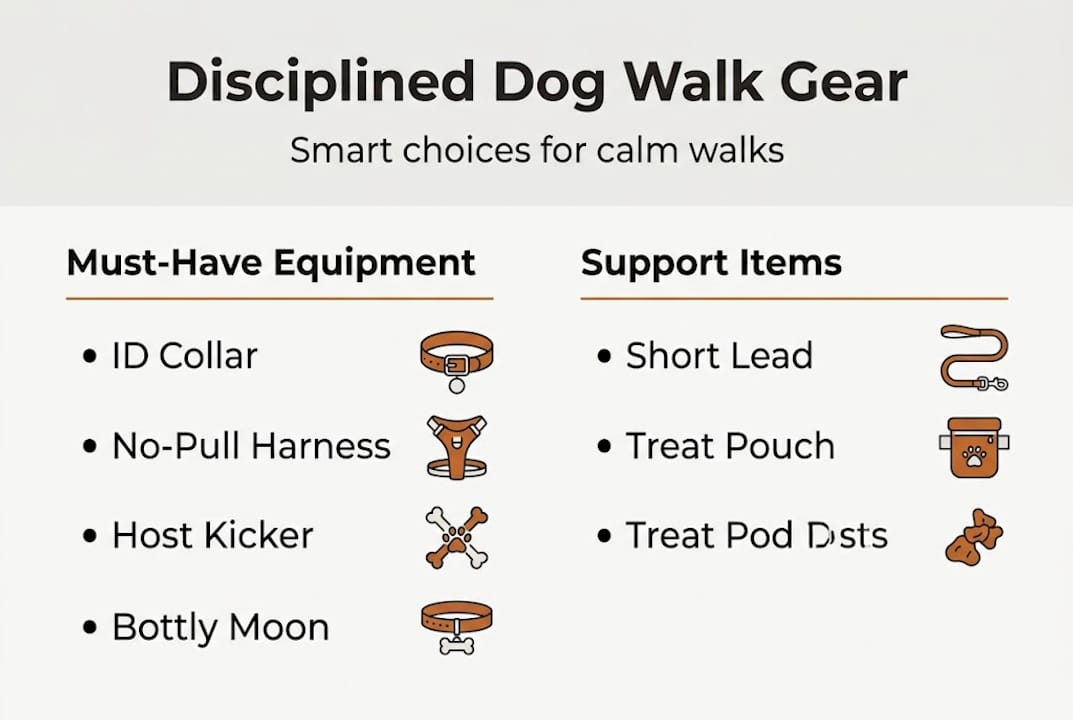
Finally, a treat pouch worn on your hip makes positive reinforcement quick and effortless. When a reward is within reach in under a second, you can mark and reinforce good behaviour the moment it happens. According to practical walking guidance, the essentials for disciplined walks include a flat collar with ID, a no-pull harness for stronger dogs, a short non-extendable lead, and a treat pouch for on-the-go rewards.
Pro Tip: Before every walk, do a quick gear check. Make sure the harness fits snugly with two fingers of space, the ID tag is secure, and your treat pouch is stocked. A thirty-second check prevents a lot of mid-walk problems.
Step-by-step discipline workflow for every walk
With your gear sorted, the next step is structuring the walk itself. A consistent routine is what turns a chaotic outing into a calm, rewarding experience for both of you.
Start before you even leave the house. Ask your dog to sit and wait at the door before you open it. This simple cue sets the tone for the entire walk. It signals that calm behaviour is what gets the good stuff, including the walk itself.
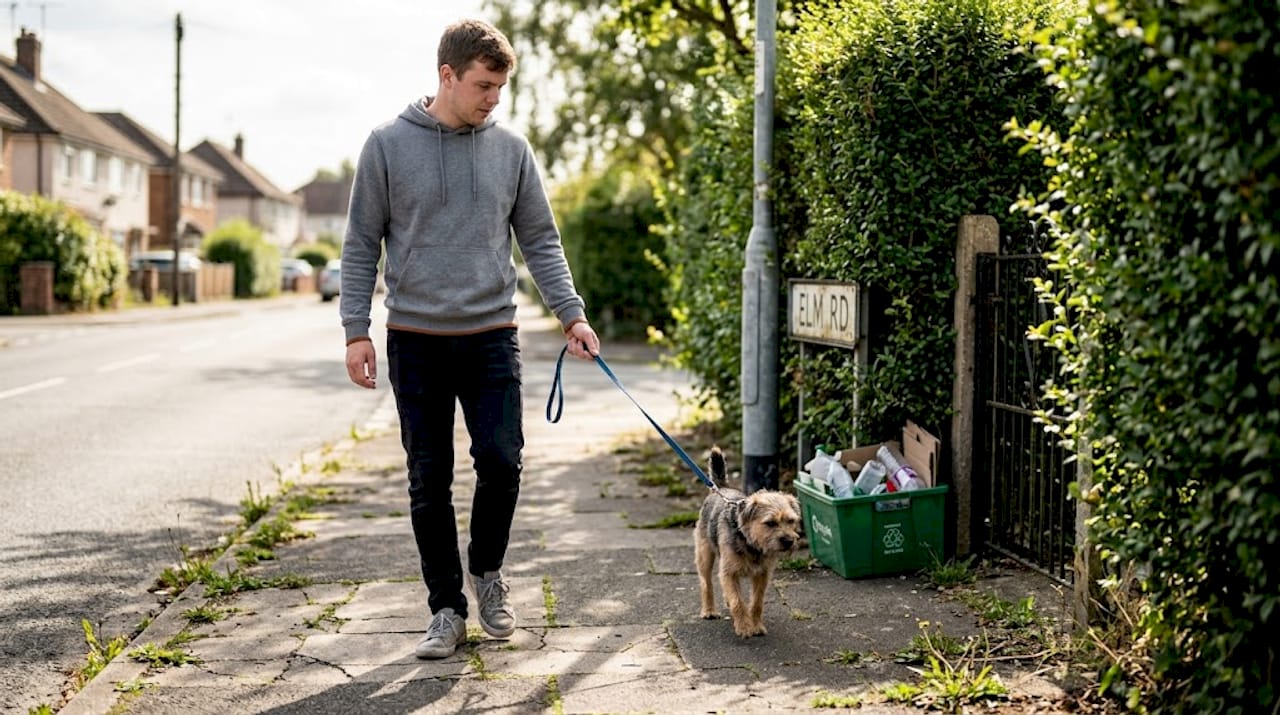
Once outside, use a short lead and give your dog enough slack to move naturally, but keep control ready. The RSPCA recommends that you give slack but maintain control, train the ‘leave it’ command for dropped food or distractions, use road safety cues like ‘wait’ at kerbs, reward calm walking with treats, and stay fully engaged rather than scrolling your phone.
The ‘heel’ command is worth practising in short bursts during the walk rather than demanding it constantly. Ask for a few steps of heel, reward generously, then allow your dog to sniff and explore. Sniffing is mentally enriching and actually helps dogs feel calmer, so it is a reward in itself.
“A dog that knows what to expect from a walk is a dog that can relax into it. Predictable routines reduce anxiety and make training cues far more effective.”
At road crossings, always use the ‘wait’ cue and reward your dog for stopping. This is a safety habit that could save your dog’s life, and it reinforces the pattern that your cues mean something worth listening to. For more on teaching road safety cues, building these habits early pays off enormously.
Pro Tip: Keep training sessions during walks short and positive. Three to five minutes of focused work spread across a thirty-minute walk is far more effective than one long, exhausting session.
Troubleshooting common discipline challenges
Even with clear structure and good gear, you will likely hit obstacles. The most common ones are pulling, lunging at other dogs, poor recall, and general leash reactivity. Each has a practical fix.
Pulling is the number one complaint from dog owners. The solution is not to yank back or shout, but to stop moving the moment the lead goes tight. Stand still, wait for your dog to release the tension, then reward and continue. It takes patience, but dogs learn quickly that pulling stops the walk, while a loose lead keeps it going.
Lunging at other dogs or cyclists often comes from excitement or anxiety. Increasing distance from the trigger and rewarding your dog for looking at you calmly is the most effective approach. Over time, you can reduce that distance as your dog builds confidence. Route planning plays a big role here; choosing quieter paths during peak hours removes unnecessary pressure while you build skills.
Recall is arguably the most important skill your dog can have, and it is one that many owners rush. Proof recall with distractions before ever allowing your dog off lead in open spaces. This means practising in progressively more distracting environments, always rewarding a return enthusiastically. Experts advise that recall must be proofed with distance and distractions before off-lead freedom, and that route planning to avoid triggers like livestock or deer is essential.
Pro Tip: Always have a contingency plan. If you spot a trigger ahead, calmly change direction before your dog reacts. Preventing a reaction is far easier than managing one once it has started.
| Challenge | Common mistake | Effective fix |
|---|---|---|
| Pulling | Yanking the lead | Stop walking; reward loose lead |
| Lunging | Shouting or pulling away | Increase distance; reward calm focus |
| Poor recall | Calling once and giving up | Proof in stages; reward every return |
| Leash reactivity | Flooding with exposure | Gradual desensitisation at distance |
Creating lasting habits: Reinforcement and review
Solving individual problems is satisfying, but the real goal is building habits that hold up over weeks and months. That requires consistency, honest review, and a commitment to positive methods.
Positive reinforcement is not just a training trend. The RSPCA confirms that positive reinforcement builds trust and prevents fear-based issues, and that structured walks turn every outing into a genuine training opportunity. When your dog knows that good choices earn rewards, they become more attentive and more willing to engage with you.
After each walk, take a moment to think about what went well and what did not. Did your dog pull less than last week? Did they respond to ‘leave it’ at the park? Small wins matter and tracking them keeps you motivated. If something consistently goes wrong, that is a signal to adjust your approach, not to give up.
Aversive techniques, such as choke chains, prong collars, or punishment-based corrections, are worth avoiding entirely. Evidence shows that aversives increase anxiety and aggression over time, and dominance-based theories have been thoroughly debunked by modern canine science. Reward-based methods build the kind of long-term reliability you actually want from your dog.
Repetition is the engine of habit. The same cues, the same rewards, the same structure, walk after walk, is what makes discipline feel natural rather than forced. Over time, your dog stops needing constant guidance because the routine itself becomes familiar and reassuring.
Key habits that support lasting walk discipline:
Review each walk honestly and note one thing to improve. Use the same cues every time without variation. Reward generously in the early stages and fade treats gradually as behaviour becomes reliable. Keep walks consistent in timing where possible, as dogs thrive on predictable schedules.
Why disciplined walking is about trust, not control
Here is what we think most guides miss when talking about dog walking discipline. The word “discipline” often gets misread as “control” or even “dominance,” and that framing leads owners down the wrong path entirely. We have seen it time and again: owners who focus on asserting authority end up with dogs that are either anxious or simply tuned out.
Real discipline, the kind that actually works, is built on trust. When your dog understands what you are asking and knows that good things follow when they respond, they choose to engage with you. That is not obedience through fear. That is a genuine working relationship.
Modern canine science is clear on this. Reward-based training produces more reliable, happier dogs than punishment-based methods. The discipline you build through consistent, positive walks is the same thing as the bond you build with your dog. They are not separate goals. They are the same goal. A well-walked dog is not a controlled dog. It is a trusted companion who feels safe enough to follow your lead.
Practical gear for your walking routine
We built Remy’s K9 Essentials around exactly the kind of practical, no-fuss gear this guide talks about. No gimmicks, no overcomplicated systems, just tools that work in real life with real dogs.
If you are ready to put this workflow into practice, our Click & Go™ harness is a great starting point for owners who want better control without discomfort for their dog. We also offer a resource guarding guide that complements the positive reinforcement approach covered here. Browse our range and find the pieces that fit your routine.
Frequently asked questions
What is the best lead for dog walking discipline in the UK?
A short non-extendable lead of around 1.2 to 1.8 metres provides the clearest communication and best control for consistent training on walks.
How do I teach my dog not to pull on walks?
Use a no-pull harness and reward calm walking with treats, stopping the moment the lead goes tight rather than pulling back or raising your voice.
Should I let my dog walk off-lead in public parks?
Only allow off-lead walking once recall is proofed with distractions in a controlled setting, and always avoid areas with livestock or other high-risk triggers.
Is using treats for walking discipline effective in the long run?
Yes. Positive reinforcement builds trust and creates reliable, focused behaviour over time without the anxiety or aggression that punishment-based methods can cause.
Recommended
- Click & Go™ Harness - Built-In Retractable Lead – Remy’s K9 Essentials
- Resource Guarding Guide (People) - Remy’s K9 Coaching – Remy’s K9 Essentials
- Resource Guarding Guide (Food) - Remy’s K9 Coaching – Remy’s K9 Essentials
- Resource Guarding Guide (Toys & Objects) - Remy’s K9 Coaching – Remy’s K9 Essentials